
ACTIVE RESEARCH PROJECTS
Research Projects
Current research in trustworthy scientific authoring and neurosymbolic robot control.
RESEARCH AT THE UNIVERSITY OF ALABAMA
These projects develop AI systems that connect learned models with explicit knowledge, executable processes, and verifiable decisions. Each project combines a concrete application with fundamental questions about how intelligent systems should represent, reason, and act.
01 / RESEARCH PROJECTIndustry-supported · AI for Services LLC
Trustworthy Neurosymbolic AI for Research Proposal Authoring
Develop an AI research assistant that helps researchers prepare NSF, NIH, and other research proposals—from interpreting a funding opportunity to organizing evidence, drafting sections, and checking requirements.
Industry partnerAI for Services LLC
Research fundingUSD 21,975
Assigned researcherAshraf Abdul-MuuminRoy research group
Academic supervisorDr. Kaushik RoyThe University of Alabama
Company contactRaj KrishnanFounder, AI for Services LLC
Project team


Company contact
Raj Krishnan
Founder, AI for Services LLC
Research objective
Research proposals combine scientific arguments with sponsor-specific instructions, eligibility conditions, budget requirements, supporting documents, and submission rules. The project investigates how an AI assistant can represent these requirements explicitly and use them throughout authoring, instead of relying on a language model to remember and apply them from text alone.
Intellectual merit
- Knowledge- and process-grounded authoring. Develop representations that connect solicitation requirements, document sections, supporting evidence, and dependencies between authoring tasks.
- Neurosymbolic agent architectures. Study agents that combine language generation and information retrieval with explicit planning, constraint checking, and coordinated verification.
- Reliable and auditable assistance. Investigate mechanisms for detecting missing evidence, inconsistent claims, and changing sponsor requirements while preserving traceable decisions and human review.
Interested in collaborating?
We welcome researchers with expertise in agentic AI, knowledge representation, scientific writing workflows, human–AI interaction, and trustworthy systems.
02 / RESEARCH PROJECTJoint project · BRAINS Lab
Neurosymbolic Methods for Robot Control
Develop robot-control methods that combine learned perception and action models with explicit task knowledge, physical constraints, and checks on what a robot can safely do.
Project statusJoint research projectRoy group + BRAINS Lab
InstitutionThe University of Alabama
Co-supervisorsDr. Kaushik RoyDr. Noorbakhsh Amiri Golilarz
Roy groupAshraf Abdul-Muumin
BRAINS Lab researchersManish Kansana · Mohammed
Joint research team
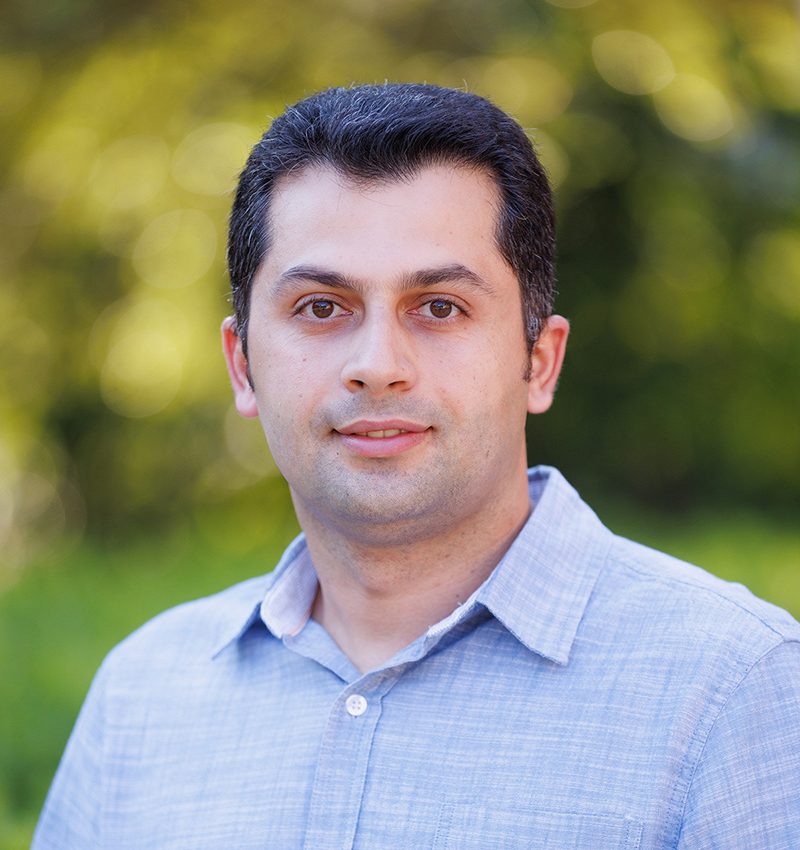
Researcher · BRAINS Lab
Mohammed
BRAINS Lab
Research objective
A robot must translate high-level goals into actions while accounting for changing observations, the capabilities of its hardware, and the consequences of each action. This joint project studies representations and control architectures that make those relationships explicit and usable during both planning and execution.
Intellectual merit
- Executable representations of robot skills. Model actions through their inputs, preconditions, expected effects, physical constraints, and available control interfaces, connecting task-level reasoning to robot behavior.
- Integrated perception, reasoning, and control. Investigate architectures that combine neural perception and learned policies with structured planning, state estimation, and runtime constraint checks.
- Adaptation with verifiable behavior. Study how robots can recover from uncertain observations, failed actions, and changes in tasks or environments, while producing inspectable explanations of their decisions.
Interested in collaborating?
We welcome collaborators working in robotics, control, embodied AI, computer vision, knowledge representation, planning, and the evaluation of reliable autonomous systems.